


Dear friends 🍂 🍁 🪶
I hope you’re as safe & well as you can be. :)
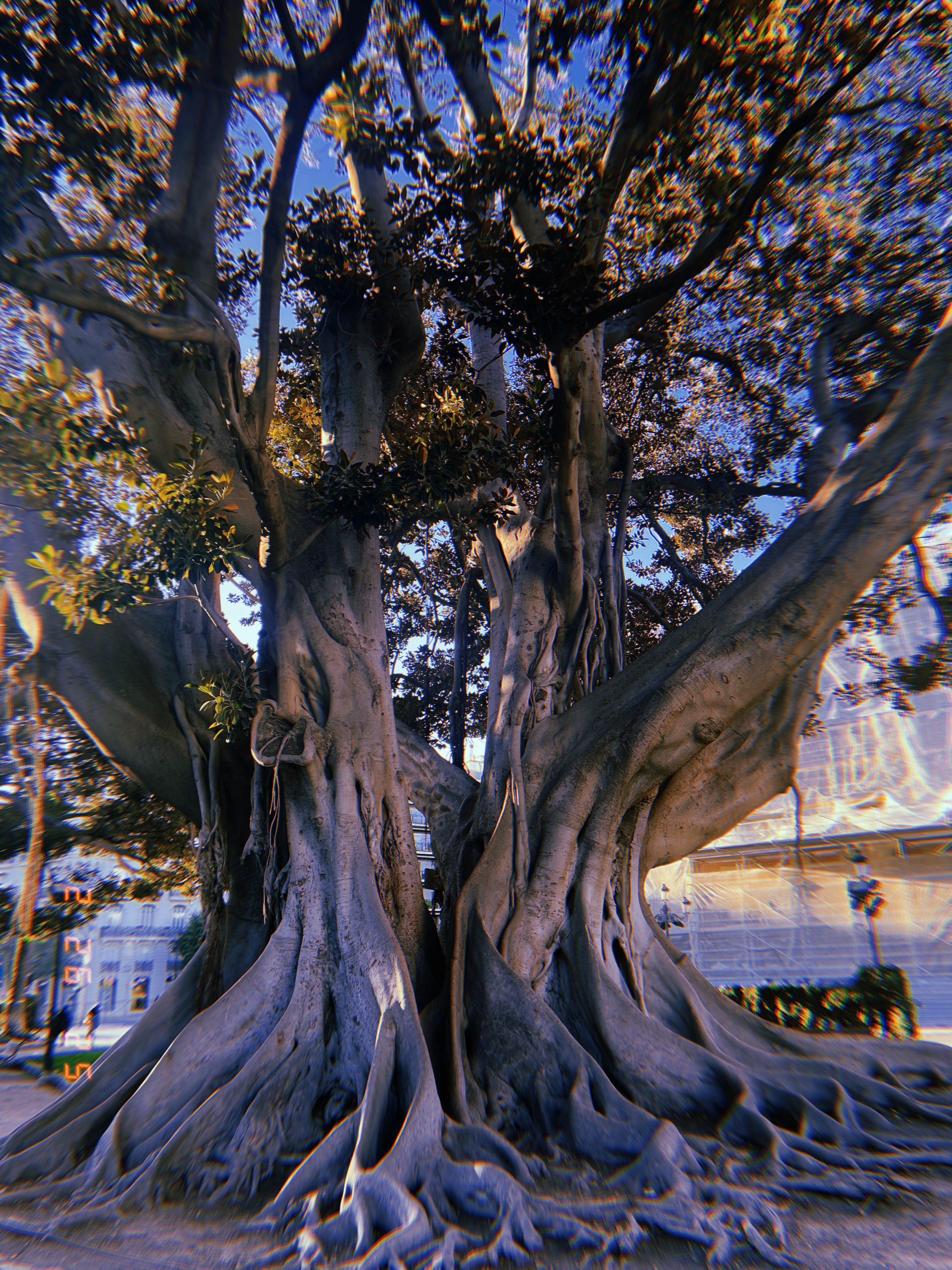
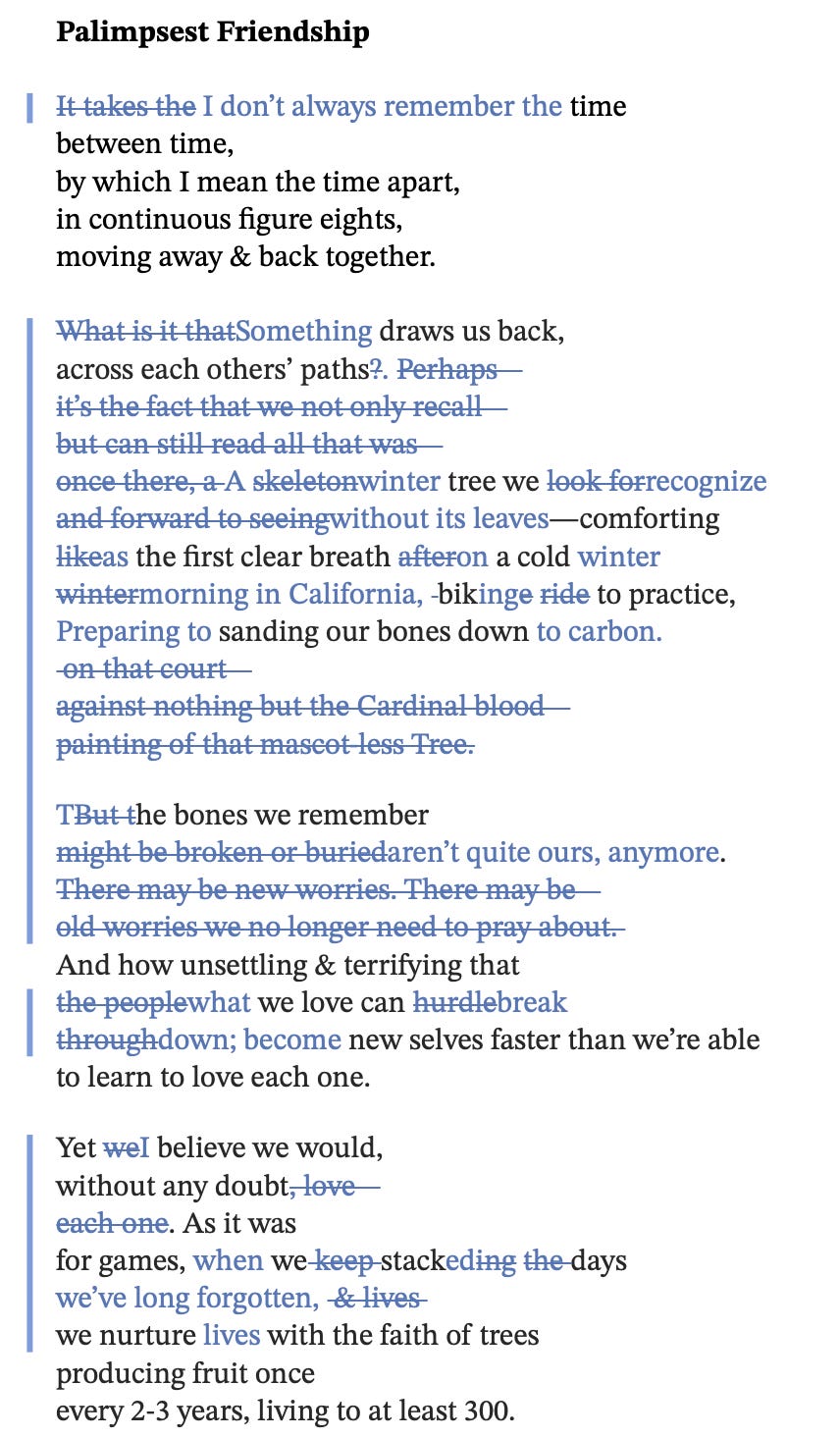
I wrote this poem after visiting two of my best friends in Spain in 2025. We only see each other in person once a year (if that), so I’ve been curious about how long-distance & long-term friendships exist, struggle, change, etc. I don’t know that this poem is quite there yet, but whittling it down has been fascinating. I hope you enjoy.
Thank you so much for reading, as always. Please take care of yourselves (as well as you’re able). ❤️🩹
With care & gratitude,
Mik
Long-Term - Edits
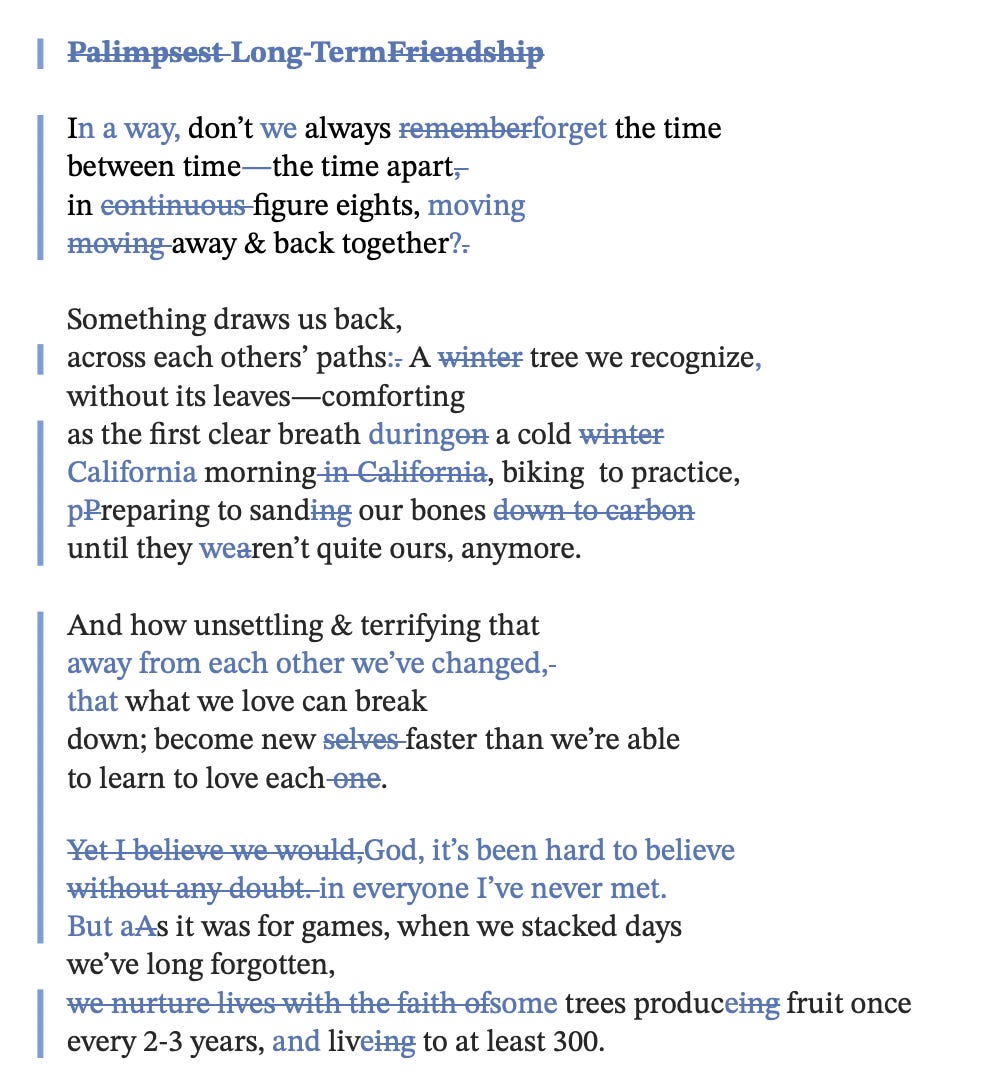
Long-Term - Revised
In a way, don’t we always forget the time
between time—the time apart
in figure eights, moving
away & back together?

Something draws us back
across each other’s paths: A tree we recognize
without its leaves—comforting
as the first clear breath during a cold
California morning, biking to practice,
preparing to sand our bones
until they weren’t quite ours anymore.

How unsettling & terrifying that
away from each other we’ve changed,
that what we love can break
down—become new faster than we’re able
to learn to love.

God, it’s been hard to believe
in everyone I’ve never met
inside a body I think I know. But as it was
for games, when we stacked days
we’ve long forgotten,
some trees produce fruit once
every 2-3 years, and live to at least 300.
Writings & Offerings 🧡
A new dispatch, from St. John’s, Newfoundland.
The next installment of my fairytales-in-verse series: “The Little Mermaid” - Part 7.
For the one-and-only, wonderful Conscious Writers Collective, I write previews for our upcoming guest speakers! Take a peek here.
Full archive here ❤️🔥
Mik, this poem (and process) has been a gift to sit with for the week. Even the act of editing is illustrative of the change swaying in the poem's undercurrent (we really can't step in the same river twice, can we?)
'In a way, don't we always forget the time / betwen time--the time apart...' ugh, this might be one of the most honoring ways I've heard the love between friends phrased.
There's a gut-wrenching anxiety in the third stanza that lingers, carrying a tune I'm all too familiar with, but the surrounding stanzas are resilient. I'm eye-deep in Kierkegaard's existential philosophy right now, and I hear a fruitful conversation here. I'll spare the comments section--just know you've presented something true and beautiful.
I'm grateful.